Steinway grand model guide
Steinway Model A
Model A describes a family of Steinway salon grands rather than one unchanged design. Early decorative instruments, later A variants and the current A-188 differ in dimensions and construction details.
At roughly 188cm and above depending on variant, a Model A offers more scale than Steinway’s smaller domestic grands while remaining shorter than the Model B.
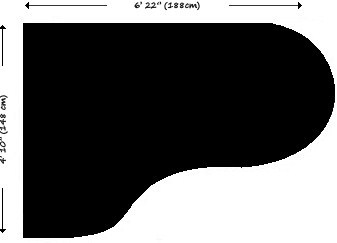
Understanding Model A variants
Use the serial number, plate markings, compass, case design and exact length to identify an individual piano. The cards below are a practical orientation rather than a substitute for inspection.
Early examples
Decorative Model A
Many late nineteenth-century UK examples have carved or substantial legs, pierced music desks and rosewood or ebonised cases. Some have an 85-note compass.
Later historical variants
A II and A III
Later Model A scales and case forms vary in length and detail. Identify the actual variant before comparing specifications, value or restoration scope.
Current reference
A-188
Length: about 188cm
Width: about 147cm
The current salon-grand reference; historical instruments may differ.
Scale, power and room acoustics
The Model A’s additional string length and soundboard area can provide greater bass development and dynamic range than Models M or O. That capacity is useful only when the piano is prepared well and matched to an appropriate acoustic.
In a small, reflective room, a powerful instrument may feel overwhelming. Rugs, curtains, furnishings, ceiling height and placement all affect balance. Assess the piano in context rather than assuming that a larger model is automatically preferable.
Consider the room
- Floor area and ceiling height
- Hard versus absorbent surfaces
- Distance from walls and strong heat
- Access route and final orientation
Assessing an older Model A
Structure
Inspect wrest-plank, tuning stability, bridges, soundboard, strings and frame. Early examples may need extensive structural work before their musical potential is realised.
Action and compass
Confirm 85 or 88 notes, assess action geometry, hammers, centres, key bushings, repetition and regulation, and identify replacement parts used in previous work.
Cabinet and provenance
Decorative cases can be historically significant. Establish what is original, refinished or replaced and retain photographs and invoices from restoration.
Compare Model A with O and B
The Model O is shorter and easier to place. Model A variants add scale and power, while the Model B moves into a longer semi-concert format. Compare actual instruments with similar preparation and restoration quality.
On an early Model A, a responsive modern-feeling action is possible after skilled restoration, but the result depends on design, parts selection and execution. Request clear documentation rather than relying on the word “restored”.
Considering a Model A?
Send the serial number, full photographs, compass, exact length and restoration history for an initial discussion.
Explore the Steinway range
Compare the full grand range, browse current pianos, or ask the Oxford team about a specific instrument.