Bechstein piano guide
A model-by-model guide to the Bechstein grands most often found in Britain, from the pre-1902 Roman-numeral series to Models A–E and the later K, L, M and S.
Overview
Responsive touch, rich tone and wide variation between examples
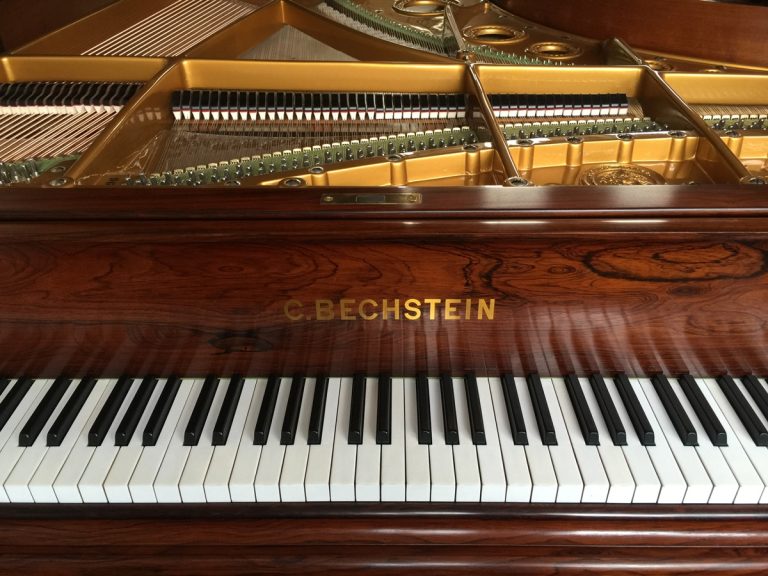
Bechstein grand pianos are valued for their responsive touch, tonal colour and elegant cabinetry. Older instruments are commonly found in black or rosewood, with some pre-1900 walnut examples and later mahogany cases.
Models A, B and V are among the grands most frequently encountered in the UK. Their present quality varies enormously, as does the standard of previous reconditioning. Compare structure, action condition, tonal evenness and documented restoration rather than relying on model name or age alone.
Before you compare prices
- Confirm the model and length
- Check whether the keyboard has 85 or 88 notes
- Inspect frame, pin-block, bridges and soundboard
- Review action work and restringing history
- Play for tonal evenness and tuning stability
Workshop example
Bechstein Model A, 1910: before and after
This restoration video provides a useful example of the tonal and visual change possible when an older Bechstein receives appropriate structural, action and cabinet work. It is an illustration, not a fixed restoration specification.
Model history
The 1902 model change
Up to about 1902, Bechstein’s principal grand sizes were identified as Models I–V. The range was then reorganised as Models A–E with revised styles and lengths.
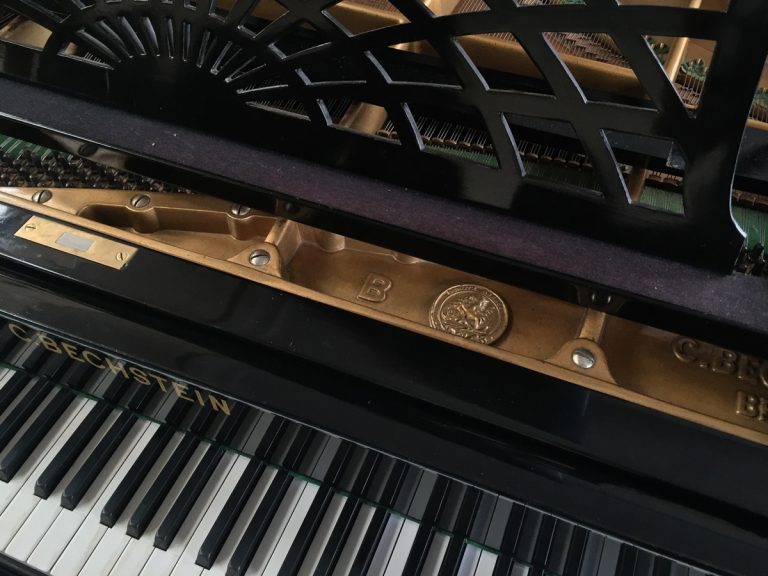
Models V and B are easily confused because their lengths are similar. The earlier Model V generally has the distinctive “fish-tail” cabinet associated with the pre-1902 range, while the later Model B does not. In the 1920s, demand for smaller grands led to the K, L, M and S, while larger models continued.
Pre-1902 Models I–V
| Model | Approximate length |
|---|---|
| I | 9ft (275cm) |
| II | 8ft 4in (254cm) |
| III | 7ft 8in (234cm), sometimes up to 240cm |
| IV | 7ft 2in (218cm) |
| V | 6ft 7in (200cm) |
Post-1902 Models A–E
| Model | Approximate length | Note |
|---|---|---|
| E | Similar to Model I | Revised successor to Model I |
| D | 8ft 2in (250cm) | Concert size |
| C | 7ft 4in (225cm) | Large salon grand |
| B | 6ft 8in (203cm) | Often confused with Model V |
| A | About 5ft 11in–6ft 1in (182–184cm) | Often 85 notes |
Models commonly found in the UK
| Model | Length | Typical period | What to know |
|---|---|---|---|
| A | About 6ft 1in (184cm) | 1902–1930 | Rosewood or black; earlier turned legs, later square-tapered legs. Often 85 notes. The best have a rich, powerful tone. |
| B | About 6ft 7in (200cm) | 1902–1930 | Common in rosewood or black; inspect the frame and restoration history carefully. |
| V | About 6ft 7in (200cm) | 1890–1902 | A common pre-1902 grand, often with fish-tail cabinet, turned legs and 88 notes. |
| M | About 5ft 10in (177–178cm) | 1920–1938 | Often mahogany or black; capable of a warm tone and strong bass. |
| L | About 5ft 6in (167–168cm) | 1920–1938 | The “Lilliput” model; one of the more convincing smaller grands when in good condition. |
Smaller Bechstein grands
| Model | Length | Comment |
|---|---|---|
| M | 5ft 10in (178cm) | A later 88-note alternative to the Model A size. |
| L | 5ft 6in (168cm) | Compact but musically substantial in good examples. |
| K | 5ft 1in (155cm) | Small grand; bass and tonal balance vary by condition. |
| S | 4ft 7in (140cm) | Often ebonised or rosewood; burr walnut is less common, with mahogany frequent after the 1920s. |
| London Bechstein | About 4ft 9in | Made around 1920–1930, designed by Max Poser and associated with Welmar-style construction. |
About the Model IV
Model IV grands from roughly 1890–1902 are less common. They can have a deep, powerful tone, turned legs, a fretted music desk and figured rosewood cabinets.
Measurements and dates are approximate; confirm the individual piano by serial number and physical dimensions.
Identify or assess a Bechstein grand
Send the serial number, keyboard count, overall length and clear photographs of the cabinet, frame and action. For a private purchase, arrange a technical inspection before committing.